

Shockproof silicone foam is very important in cars. It helps solve big problems in new energy vehicles. Engineers use its special features to make sure things are sealed well. It also protects battery systems and makes them last longer. Some main benefits are:
- Superior sealing keeps water and dust away from battery packs.
- Shock absorption helps batteries last longer and keeps electronics safe.
- Thermal insulation and flame retardancy help control battery heat and lower fire risks.
- Custom shapes let it fit many kinds of vehicle designs.
- Car makers use silicone foam because it works well in hot and cold. It helps keep cars safe and working right, so it is needed in today's vehicles.
Material Properties
Structure of Silicone Foam
Silicone foam is special because of how it is built inside. Engineers make it with lots of tiny cells that connect together. This design lets air move through the foam easily. It also helps the foam stay strong, even after being used for a long time. The foam's cell pattern lets it take in and spread out force from bumps. This makes it very good at stopping shocks.
- The foam does not change shape much when pressed. It does not shrink or bend easily.
- It bounces back and cushions parts that need protection.
- There are open-cell and closed-cell types. Closed-cell silicone foam keeps water out and stays bendy in hot or cold places.
- The siloxane backbone keeps the foam tough and long-lasting, even when things get rough.
- The foam's structure helps it soak up shakes and hits. This makes it great for stopping vibrations and shocks.
- Note: Silicone foaming materials keep working well from -60°C to 230°C. They do not get damaged by sunlight, chemicals, or bad weather. This means they last a long time in electric cars.
Key Features for New Energy Vehicles
Silicone foam has many traits that make it good for new energy cars. The table below shows these traits and why they help:
|
Material Property |
Benefit for EV Battery Applications |
|---|---|
|
Low Density |
It is light, keeps heat away, and stops battery damage. |
|
Flame Retardant |
Meets UL94-V0, lowers fire risk, and makes cars safer. |
|
Electrical Insulation |
Stops battery problems from electrical faults. |
|
Stability & Waterproof |
Keeps water out and protects batteries from getting wet. |
|
Low Shrinkage & Damage Resistance |
Stays the same shape and fights wear over time. |
|
High Elasticity |
Takes in bumps and shakes, keeping batteries safe. |
|
Sound Insulation |
Makes cars quieter by blocking noise. |
|
Impact Absorption |
Guards batteries from hard hits. |
|
Thermal Conductivity |
Helps control heat and keeps batteries working well. |
Silicone foam is light, blocks heat, and stops fires. These things help keep batteries safe, control heat, and make electric cars work well and safely.
Application of Silicone Foam in New Energy Vehicles
Battery Protection
Shockproof silicone foam is very important for battery safety in new energy vehicles. Engineers use it to make fire protection sheets between battery cells and modules. These sheets stop heat from spreading and help prevent thermal runaway. The foam keeps its shape even when it gets hot. It gives strong dielectric protection for high-voltage parts.
Silicone foam pads help with battery cell changes during charging and discharging. This is needed for energy density lithium battery packs, where cells can swell or shrink. The foam takes in these changes and stops damage. Fire-resistant potting foams fill spaces between cells. This helps machines build batteries and makes sure everything fits tight.
Manufacturers use silicone foam because it seals out water. This keeps moisture, dirt, and salt away from the battery pack. If these get in, they could cause short circuits. The foam meets strict safety rules like UL 94 V0 for stopping fires and IP67 for water resistance. These features make it a top choice for battery protection in cars.
Note: Shockproof silicone foam gives good shock absorption and impact protection. It cushions battery modules from bumps and shakes. This lowers the chance of damage in accidents or rough driving.
Gap Filling and Sealing
Silicone foam is used as a gap filler and sealant in new energy vehicle batteries. The foam fills spaces between battery cells and holds them in place. This adds strength to the battery pack and stops movement that could cause problems.
Silicone sealing foam makes a tight seal around battery modules and electronics. Its elastic cell structure lets it compress by 30-60%. It can fit many shapes and sizes. The foam stays flexible and works well even after opening and closing the battery case many times.
Manufacturers use machines to put the foam in the right spot every time. The foam sticks well to steel, aluminum, and plastics. This makes it good for many car designs. Its low water absorption and strong sticking power keep water, dust, and bad weather away from electronics.
Key benefits of gap filling and sealing with silicone foam:
- Stops thermal runaway by giving thermal insulation.
- Adds protection against shocks and vibrations.
- Keeps the seal tight after many uses.
- Helps fast and easy production with machines.
Vibration Damping
Vibration damping is another big use for silicone foam in cars. Sensitive parts like battery management systems and electronics need to be safe from shaking and noise. Silicone foam pads, like BISCO BF-1000, give good compression set resistance and stress relief in hot or cold.
These damping materials block noise and vibration from the car moving. Compression pads hold battery cells tight but let them expand and shrink. This keeps shock absorption working well. The foam's open cell structure lets it bounce back fast and not stay squished. This means it can take many shocks over the car's life.
Silicone foam keeps electronics safe from water, rust, and chemicals. It stays strong even with sudden temperature changes and repeated stress. This is important for long-lasting batteries and electronics. The foam's toughness and resistance to sunlight and wear help batteries and electronics last longer.
Main advantages of using shock-absorbing cushions in vibration damping:
- Gives cushioning and shock absorption for battery modules and BMS.
- Works well in very hot or cold, from -65°F to +400°F.
- Lowers stress on parts and helps make cars lighter.
- Keeps electronics safe and working for a long time.
- Tip: Using silicone foam as a shock absorber helps lower weight, keep heat in, and make new energy vehicles safer. Its shock absorption makes it a top pick for engineers who want reliable and long-lasting solutions.
Shockproof Silicone Foam for Safety
Flame Retardancy
Shockproof silicone foam is very important for electric car safety. It stops fires from starting and spreading. Engineers pick this foam because it meets tough rules like UL94-V0. This means the foam does not catch fire easily. The foam's special structure and added chemicals help it stop flames. It also has a high limiting oxygen index (LOI), so fire cannot keep burning.
|
Sample Composition |
LOI (%) |
UL-94 Rating |
|---|---|---|
|
Pure Silicone Foam (SiFs) |
27.8 |
V1 |
|
SiFs + 3 wt% SEP |
29.3 |
V0 |
|
SiFs + 6 wt% SEP |
29.7 |
V0 |
|
SiFs + 9 wt% SEP |
30.2 |
V0 |
|
SiFs + 3 wt% MSEP |
29.5 |
V0 |
|
SiFs + 6 wt% MSEP |
30.2 |
V0 |
|
SiFs + 9 wt% MSEP |
30.8 |
V0 |
|
SiFs + 3 wt% MSEP + 6 wt% ZB |
30.9 |
V0 |
The table shows that adding special things to the foam makes it safer. The foam with these extras always gets the best fire safety scores for EV batteries. The chart below shows how much oxygen is needed for each foam type to burn:
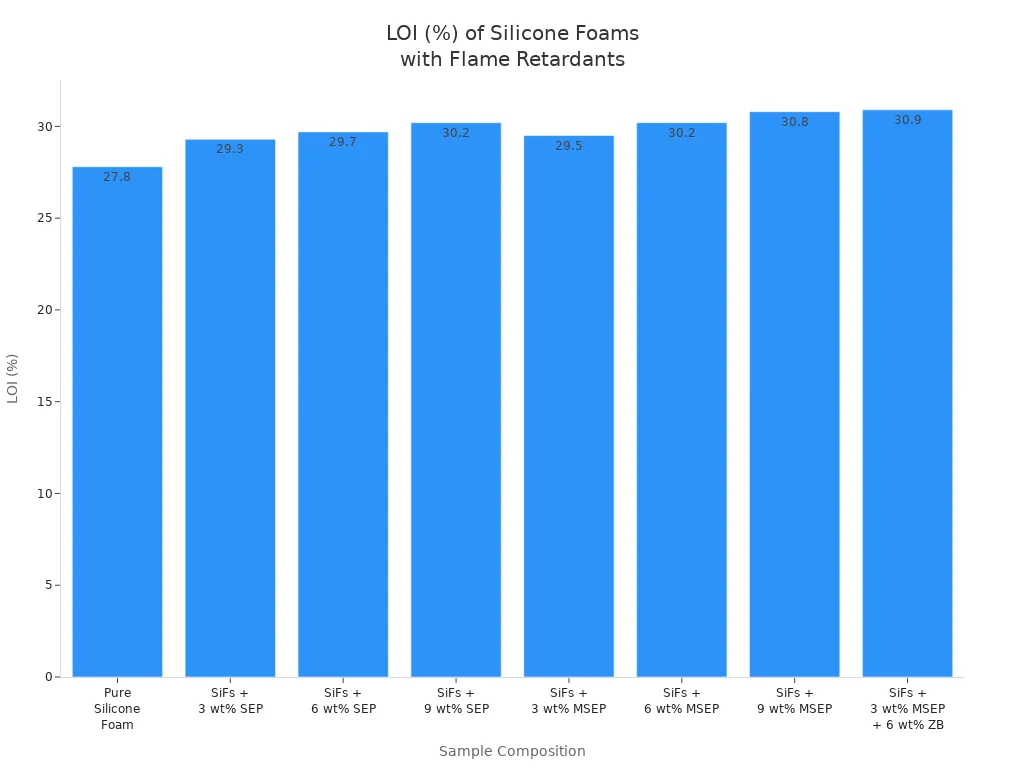
Car makers use XYFoam® SSF-T35 and Rogers Bisco® HT800 for batteries. These foams have top fire safety ratings like UL94 V0 and HF-1. They help keep batteries safe if they get too hot. The foam also stops fire from spreading, even in tough situations.
Note: Shockproof silicone foam meets ISO 9001:2015, ISO 14001:2015, IATF 16949, RoHS, and REACH. This means it is good for quality and the environment.
Explosion Protection
Explosion protection is also very important for electric cars. Shockproof silicone foam acts like a shield. It takes in energy from hits and helps stop battery cells from breaking. The foam's shockproof power keeps battery packs safe in crashes or hard bumps.
Car safety rules like FMVSS 305 want to stop leaks and electric shocks after accidents. The foam does not have this rule by itself, but it helps by sealing batteries and stopping dangerous stuff from spreading. The foam is strong, does not shrink much, and keeps water out. This makes it even better at protecting batteries.
Key safety features of shockproof silicone foam:
- Takes in hits to keep batteries safe.
- Stays strong and keeps working under pressure.
- Makes a tight seal to block water and dust.
- Helps meet car and electronics safety rules.
- Shockproof silicone foam mixes shock absorption and fire safety. This helps car makers keep batteries safe from fire and explosions. That is why it is a trusted material for new electric cars.
Thermal Management
Heat Insulation
Silicone foam is very important for keeping heat away in electric cars. Engineers pick it because it is bendy, light, and blocks heat well. It works as a pad that presses down and takes in stress when battery cells get bigger or smaller. The foam does not let heat pass through easily, so it is great for keeping batteries safe from getting too hot or cold. It can handle very low and high temperatures, from –80 °C to 250 °C. This helps batteries work safely even when it is really hot or cold outside.
Car makers use silicone foam to stop batteries from getting too hot. The foam can fit many shapes, so it seals tight and keeps heat out. It also keeps water, dirt, and other bad things away from battery parts. The foam does not get ruined by chemicals, so it lasts longer in tough places. It also stops electricity from jumping where it should not go. The foam slows down fire, which makes batteries safer.
|
Aspect |
Evidence Summary |
|---|---|
|
Material Used |
Silicone hose in liquid cooling battery thermal management system (BTMS) |
|
Temperature Reduction |
Maximum battery temperature reduced by over 10 °C |
|
Battery Temperature Range |
Maximum temperature under optimal conditions: ~39.99 °C |
|
Cooling Performance |
Maintains battery temperature within safe range under various operating conditions |
|
Mechanical Benefits |
Lightweight, shock-proof, flexible compared to metal connections |
Tip: Because silicone foam is light, it helps make cars lighter. This means cars can go farther and use less energy.
Energy Efficiency
Silicone foam helps electric cars use energy better by keeping batteries at the right temperature. The foam spreads out heat made by the battery, so it does not get too hot. Its tiny holes stop some spots from getting hotter than others. This keeps the battery cool everywhere. When batteries stay cool, they last longer and work better.
The foam is stretchy, so it takes in bumps and keeps battery parts safe. Because it is light, it helps the whole car use less energy. Car makers put silicone foam in battery systems to keep them cool and safe. The foam works well even when it is very hot, cold, or dirty.
- Silicone foam keeps heat in check and stops shaking.
- It lowers the chance of batteries getting too hot and makes them last longer.
- By making batteries safer and better, silicone foam helps cars use less energy.
- Its light weight also helps cars go farther on one charge.
- More car makers want silicone foam because it helps save energy and keeps batteries cool.
- Note: Silicone foam is good for keeping batteries safe, stopping fires, and blocking heat. That is why it is used a lot in new electric cars.
Environmental Resistance
Durability and Flexibility
Silicone foam is special in electric cars because it lasts a long time. It keeps working even in tough places. Car makers use it for seals and gaskets that face heat, pressure, and chemicals. The foam stays bouncy and keeps its shape, even after being squeezed for years. Engineers pick silicone foam because it soaks up shakes and blocks noise. This helps protect important parts and makes the car ride smoother.
Silicone foam works in very hot or cold, from -55°C to +200°C.
- It does not break or wear out from sunlight, ozone, or water.
- The foam stands up to oils, fuels, coolants, and other car liquids.
- Its tiny cells take in bumps and shakes, keeping things safe.
- Good silicone foam keeps sealing well for a long time, so you do not need to replace it often.
- Car makers put silicone foam in gaskets, seals, tubes, and weatherproofing. It bends to fit odd shapes, so it seals tightly. The foam is tough and can last over 20 years if treated right. This helps keep batteries and other parts safe for the car's whole life.
- Tip: Silicone foam does not get tired or change shape much, so car parts last longer and need less fixing.
Anti-Leakage and Dustproofing
- Electric cars need strong seals to stop leaks and dirt. Silicone foam makes great seals that block water, dust, and dirt from getting in. It stays tight, even after being used many times or in bad weather.
- The foam makes strong seals for batteries, wires, and electronics.
- It stops water and dust from hurting important parts, so they do not rust or break.
- Silicone foam does not wear out outside or in hard car jobs.
- It also slows down fire, meeting strict UL fire rules.
- Car makers use silicone foam in gaskets and seals to stop leaks and keep out dirt. Its bendy and tough nature makes it a must-have for new electric cars. By stopping leaks and blocking dust, silicone foam helps batteries and electronics last longer.
- Note: Good sealing and dust blocking from silicone foam help electric cars work safely and well, even when things get rough.
Comparison with Other Materials
Traditional Foams vs. Silicone Foam
Engineers look at silicone foam and other foams like polyurethane, polyethylene, and expanded polypropylene when making electric cars. Each foam has good points, but silicone foam is better in many ways:
- Silicone foam works in very hot and cold, from -50°C to 200°C. Other foams can lose shape or break if it gets too hot or cold.
- It passes tough fire safety tests like UL94 V-0 and FAR 25.853. Silicone foam puts out fires by itself, but many other foams can burn faster.
- The foam takes in shocks and shakes, so battery cells and electronics do not get hurt.
- It makes seals that block water and dust, with IP67/IP68 ratings. Most other foams cannot keep water or dust out as well.
- Silicone foam stays bouncy and keeps its shape after lots of squeezing. This helps car parts last longer.
- It is light and comes in thin sheets, so it saves space and helps cars use less energy.
- People use it for battery insulation, sealing gaskets, thermal barriers, vibration damping, and cable protection.
- Tip: Silicone foam works well and lasts a long time. This makes it a great pick for keeping electric cars safe and working right.
Cost and Value
Silicone foam costs more than other foams because it is made from special materials and needs careful work to make. But it is worth the price for tough jobs in electric cars:
- The foam handles heat, water, and lasts a long time. This helps batteries stay safe and work longer.
- It means fewer repairs and less chance of battery problems.
- PU, PE, and EPP foams are cheaper and good for seats, crash pads, and insulation. But they do not keep batteries as safe or work as well.
- Car makers want light, strong, and safe materials as more people buy electric cars.
- Silicone foam's special features make the higher price fair, especially for battery insulation and protection.
- By making batteries safer and following strict rules, silicone foam helps save money over time.
|
Material |
Upfront Cost |
Thermal Stability |
Fire Safety |
Durability |
Best Use Cases |
|---|---|---|---|---|---|
|
Silicone Foam |
High |
Excellent |
Superior |
Long Life |
Battery, electronics, sealing |
|
PU/PE/EPP |
Low |
Moderate |
Moderate |
Good |
Seats, crash pads, insulation |
Note: Picking silicone foam means you get more safety, better reliability, and save money in the long run for electric cars.
Future Trends in New Energy Vehicles
Innovations in Silicone Foam
Engineers are always working to make silicone foam better for electric cars. They want the foam to be safer, smarter, and work better. Some new ideas are:
- Eco-friendly, bio-based silicone foam helps car makers follow green rules.
- Nanocomposite silicone foams move heat away, so batteries stay cool.
- Fire-resistant bio-silicone types help stop fires in cars.
- Smart silicone foams have sensors that check battery health all the time.
- Industry 4.0 tools, like IoT quality checks and smart data, help make foam faster.
- High-temperature silicone foams keep batteries safe in hot places.
- Car companies and electronics makers team up to design special silicone foam for batteries, stopping shakes, and blocking EMI.
- Big companies spend money on new ways to make silicone foam take in shocks and handle heat better. These new foams help batteries last longer and work well. More people want flame retardant silicone foam because of safety rules and the need for lighter, better materials.
|
Innovation |
Expected Impact |
|---|---|
|
Smart sensors |
Real-time fire detection and alerts |
|
Nanofillers |
Increased durability and strength |
|
Intumescent agents |
Improved fire resistance and safety
|

Sustainability
Car companies now try to make silicone foam better for the planet. They use materials that can be recycled or come from plants. Makers design foam that can be used again or turned into something new. This helps meet new green rules and what buyers want.
Low-density silicone foam uses less material and makes cars lighter. This helps cars save energy. Better ways to make foam mean less waste and save more resources. Car makers and suppliers work together to make special green insulation. The industry also tries to make foam last longer, so there is less trash and more reuse.
Silicone foam lasts a long time and bends without breaking, so it is good for electric cars. As more people buy EVs, more silicone foam will be needed. Companies keep working on ways to recycle foam and make it even better for the environment.
Tip: Picking green silicone foam helps car makers build safer, cleaner, and better electric cars for the future.
Shockproof silicone foam gives important help to new energy vehicles. It keeps batteries and electronics safe in many ways. It stops fires, blocks electricity problems, and takes in shocks. It also stays strong in hot or cold. The table below shows these good points:
|
Key Advantage |
Description |
|---|---|
|
Flame Retardant |
Lowers fire danger, meets UL94-V0 |
|
Electrical Insulation |
Stops short circuits |
|
Shock Absorption |
Softens hits and shaking |
|
Thermal Stability |
Keeps shape and works well |
|
Waterproof Sealing |
Stops water and dust |
Car makers like silicone foam because it lasts long and bends easily. It also passes tough safety tests. Experts say to make bio-based types, help recycling, and add smart tools for the future. Silicone foam is a smart pick for safer and longer-lasting electric cars.
FAQ
What makes shockproof silicone foam better than traditional foams in EVs?
Silicone foam stands up to heat, fire, and chemicals. It keeps its shape after lots of use. Other foams can break or burn more easily. Engineers pick silicone foam for battery safety and long life.
How does silicone foam improve battery safety in electric vehicles?
Silicone foam takes in shocks and stops fire. It blocks water and dust from getting in. This helps stop short circuits and thermal runaway. Battery packs stay safer in crashes or tough times.
Can silicone foam handle extreme temperatures in electric vehicles?
Yes. Silicone foam works from -60°C to 230°C. It stays bendy and strong in hot or cold. This makes it great for EV batteries and electronics.
Where do manufacturers use silicone foam in electric vehicles?
Manufacturers put silicone foam in battery modules, BMS, gaskets, and seals. It fills spaces, cuts down vibration, and keeps out heat. The foam also shields electronics from dust and wetness.
Is silicone foam environmentally friendly for EV applications?
Many companies now make eco-friendly silicone foam. Some types use recycled or plant-based materials. These choices help cut waste and support green goals in the EV industry.
Rolifyx is a high-tech enterprise specializing in the research, development,If you have any needs, please click to visit our website to contact us and obtain more solutions.