

Engineers use silicone potting compounds to protect electronics and keep them working well in tough places.
- These materials are flexible, stable in heat, and stop electricity from leaking, which helps things work better.
- They can handle hot and cold, water, sunlight, and chemicals, so they work well outside and in boats.
- Being flexible lets them handle stress and changes in temperature, so they last longer.
- They are not as strong as some other choices, so engineers must think about what they need.
The market for silicone potting compounds is getting bigger because many industries want strong products. Experts see the market growing, with new chances in electronics, cars, and planes. New ideas and higher standards are changing the market. Top companies focus on making their products reliable and able to change, which shapes the market for silicone potting compounds.
Silicone Potting Compounds Performance
Flexibility and Elasticity
Silicone potting compounds are very flexible and stretchy. This helps protect electronics in tough places. They stay bendy and can stretch a lot. This means they can take stress without breaking. Electronics stay safe from shaking, bumps, and quick temperature changes. In cars, silicone potting compounds keep control modules and sensors safe. They work well even when things move or shake a lot. Their soft, rubber-like feel spreads out stress. This lowers the chance of damage and helps devices last longer.
Here is a table that compares flexibility and stretching for common potting materials:
|
Material |
Shore Hardness Range |
Elongation at Break (%) |
Flexibility Characteristics |
|---|---|---|---|
|
Silicone Rubber |
20 - 60 A |
200 - 1000 |
Very flexible and elastic; absorbs and buffers external forces well; adapts to various shapes |
|
Polyurethane |
30 - 90 A |
100 - 500 |
Moderate flexibility; balances strength and flexibility |
|
Epoxy Resin |
80 - 90 D |
1 - 5 |
Very hard and brittle; poor flexibility; prone to cracking under stress |
Silicone potting compounds stay flexible after they set. This makes them great for jobs where stopping vibration and taking stress is important.
Temperature Resistance
Silicone potting compounds work well in very hot and cold places. They can handle temperatures from -65°C to 250°C. They stay bendy and strong even when temperatures change fast. This is important for things like planes, car electronics, and LED lights. Their cured system is stretchy and not too hard. It takes in stress from temperature changes and shrinking. This stops cracks and breaks when temperatures go up and down.
Tip: Silicone potting compounds are better at handling heat than epoxy and polyurethane. This makes them the best choice for hot places like electric car chargers and power electronics.
Moisture and Chemical Resistance
Silicone potting compounds are great at keeping out water and chemicals. This helps electronics work well in tough places. They block water, sunlight, and ozone. This keeps parts safe outside or on boats. They stay flexible and work in many temperatures. They can handle swelling and shaking without losing their protection.
Silicone potting compounds help electronics work well in wet places.
They do better than epoxy and polyurethane at stopping water, especially when flexibility and lasting power matter.
Their chemical resistance makes them good for planes, the military, and medical tools, where chemicals and wetness are common.
Thermal Insulation
Thermal insulation is important for silicone potting compounds. They keep electronics safe from heat and temperature changes. They control how much parts expand when hot or cold. This stops damage while things are working.
Some silicone potting compounds also move heat away from parts. For example, a thermally conductive silicone potting compound can have a thermal conductivity of 1.2 W/m°K. This helps manage heat in powerful devices.
|
Property |
Value |
|---|---|
|
Thermal Conductivity (W/m°K) |
1.2 |
|
Service Temperature Range |
-55°C to 200°C |
|
Hardness (Shore A) |
60 |
Silicone potting compounds stay stretchy and do not crack in extreme temperatures. They give a flexible shield that lowers the effect of heat shocks and shaking. This mix of insulation and heat movement helps electronics last longer and work better.
Hardness and Tensile Strength
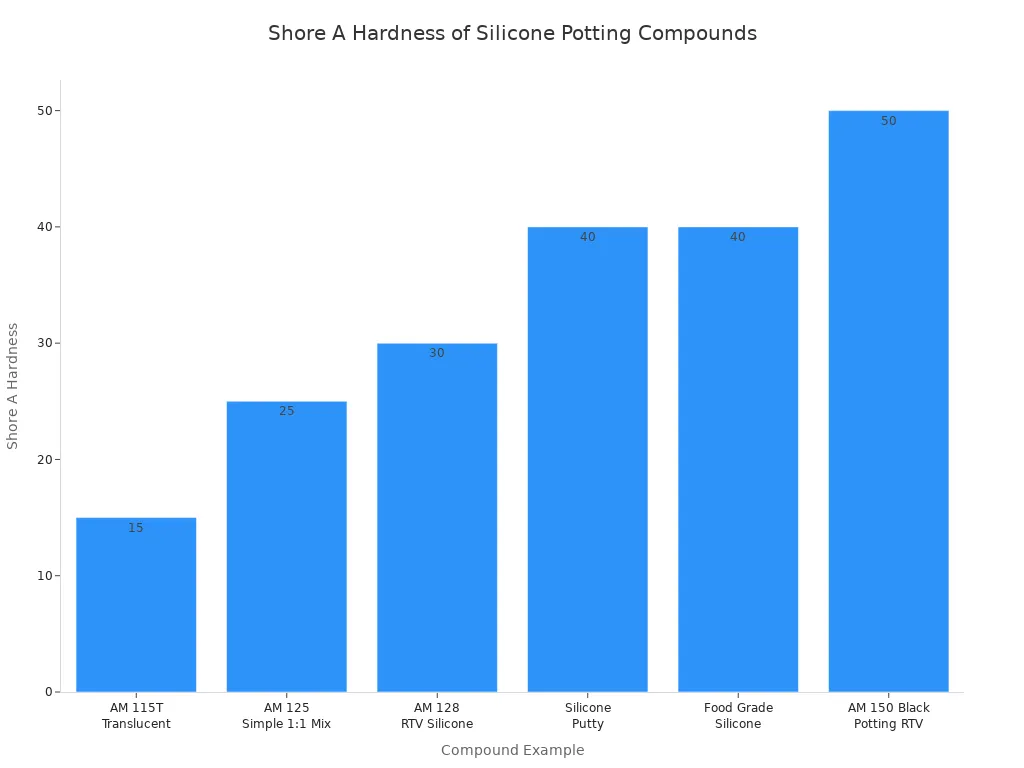
How hard and strong silicone potting compounds are affects how they are used. These materials usually have a Shore A hardness from 15 to 60. This means they are softer and bendier than epoxy or polyurethane. Their tensile strength is usually between 120 psi and 2,000 psi, depending on the type.
|
Silicone Potting Compound Example |
Typical Shore A Hardness |
|---|---|
|
AM 115T Translucent Silicone Rubber |
15 Shore A |
|
AM 125 Simple 1:1 Mix Silicone Rubber |
25 Shore A |
|
AM 128 RTV Silicone Rubber |
28-32 Shore A |
|
Silicone Putty |
40 Shore A |
|
Food Grade Silicone Rubber |
40 Shore A |
|
AM 150 Black Silicone Potting and Encapsulation RTV Rubber |
50 Shore A |
Lower hardness and more flexibility help silicone potting compounds stop shaking and handle temperature changes without cracking. But their tensile strength is lower than epoxy, so they are not as good for jobs needing hard protection. Engineers should think about these features when picking a silicone potting compound for their needs.
Electrical Properties
Insulation Resistance
Silicone potting compounds give strong insulation resistance. This stops unwanted current from moving in electronics. High insulation resistance blocks electricity from leaking between parts. Engineers pick silicone potting compounds for steady electrical insulation. They work well even when it is wet or dirty. These compounds keep working the same way for a long time. This protects sensitive circuits from damage.
Note: High insulation resistance helps keep electricity safe. It lowers the chance of short circuits.
Dielectric Strength
Dielectric strength shows how much voltage a material can take before breaking. Silicone potting compounds have great dielectric strength. This makes them good for high-voltage and high-frequency uses. The table below shows dielectric strength for common potting materials:
|
Potting Material |
Dielectric Strength (kV/mm) |
|---|---|
|
Epoxy-based Compounds |
12 – 20 |
|
Silicone Potting Materials |
16 – 24 |
|
Polyurethane Potting Solutions |
10 – 18 |
Silicone potting compounds do better than other materials in dielectric strength. This means they give better electrical insulation and can handle strong electric fields. In high-frequency devices, dielectric strength keeps signals clear and stops breakdowns. Engineers trust these compounds for tough jobs.
- Dielectric strength helps insulation in high-voltage systems.
- Special fillers and stable structure make performance better.
- Good curing and right thickness also help dielectric strength.
Volume Resistivity
Volume resistivity tells how well a material stops electric current from passing through it. Silicone potting compounds have high volume resistivity. This makes their electrical insulation stronger. It helps stop electrical problems and makes electronics last longer. High volume resistivity also helps in tough places, like very hot or wet spots.
High volume resistivity means better insulation and fewer problems.
Silicone potting compounds protect against shocks, heat, and dirt.
Picking the right volume resistivity gives strong and reliable performance.
Silicone potting compounds give great electrical insulation and work well. Their insulation resistance, dielectric strength, and volume resistivity make them a top pick for engineers who want safe electronics.
Mechanical Properties
Vibration Resistance
Silicone potting compounds are good at stopping vibration. Their flexible structure helps absorb shocks. This lowers stress on sensitive electronics. Engineers use this to protect circuit boards and sensors. It works well in cars and factories. The soft material cushions parts. This stops cracks and breaks when things move. This protection helps electronics work better. It is important in places with lots of movement or impact.
Tip: Silicone potting compounds help devices last longer. They keep performance steady when there is vibration.
Adhesion
Adhesion is important for potting compounds. Polyurethane potting materials stick better than silicone compounds. Polyurethane bonds tightly to plastics and composites. This makes a strong seal for electronics. It cures at lower temperatures and does not crack easily. This helps it work well in many jobs. Silicone potting compounds are very flexible and handle heat well. But they do not stick as strongly. Their softness and easy repair make them good for sensitive parts. They are easier to remove than polyurethane. Engineers pick silicone when flexibility and easy removal are needed more than strong sticking.
|
Potting Material |
Adhesion Strength |
Flexibility |
Temperature Resistance |
Repairability |
|---|---|---|---|---|
|
Silicone |
Low |
High |
Excellent |
High |
|
Polyurethane |
High |
Moderate |
Good |
Moderate |
Elongation at Break
Elongation at break shows how much a material can stretch before snapping. Silicone potting compounds stretch a lot, from 200% to 1000%. This helps them handle stress and bending without breaking. Devices with silicone potting compounds do not tear easily. They stay strong when they expand or shrink from heat. Polyurethane compounds stretch a medium amount. Epoxy resins are hard and break quickly under stress. Silicone's high stretch helps devices work well in places that move a lot.
High stretch stops cracks and failures.
Silicone compounds keep working when stretched or squeezed.
Engineers choose silicone for jobs needing flexibility and strength.
Environmental Resistance

UV Stability
Silicone potting compounds work well outside in the sun. Makers add UV stabilizers to help them last longer. These stabilizers stop damage from ultraviolet rays. This keeps the compounds from turning yellow or breaking down. Devices like solar inverters and LED lights need this protection. Outdoor sensors also benefit from it. The compounds do not react with other chemicals. They also do not rust, so they last a long time. Good curing and careful use make UV stability better. Some silicone potting compounds are clear and resist UV rays. This keeps parts easy to see and stops yellowing. Engineers pick these compounds for outdoor jobs with lots of sunlight.
Silicone potting compounds keep working in sunlight.
UV stability helps electronics stay safe and look good.
Picking the right compound is important for outdoor use.
Cryogenic Performance
Silicone potting compounds work well in very cold places. Their flexible structure lets them stay soft in freezing weather. Many compounds work from -65°C to 250°C. This wide range is good for planes, science tools, and cold storage. The compounds do not crack or lose shape in the cold. This helps protect sensitive parts and keeps devices working.
Note: Cryogenic performance is why engineers use silicone potting compounds in tough jobs.
Long-Term Durability
Engineers test how long silicone potting compounds last by watching samples over time. They check how the compounds work in real conditions. Temperature cycle tests heat and cool the samples again and again. This checks for cracks or changes. Wet heat cycle tests use heat and water to see if the compounds keep working. These tests show how long the compounds can protect electronics. Good results mean the compounds last many years in hard places.
|
Test Type |
What It Measures |
Why It Matters |
|---|---|---|
|
Temperature Cycle |
Handles hot and cold changes |
Stops cracks and breaks |
|
Wet Heat Cycle |
Blocks water and moisture |
Keeps electronics working |
|
Real-World Monitoring |
Checks how long it lasts |
Shows if it is reliable |
Silicone potting compounds work well in hard places. They can handle sun, cold, and water. This makes them a good choice for engineers.
Silicone Potting Compounds Market Growth
Application Trends
The silicone potting compounds market is growing fast. New ideas and more uses in electronics, cars, and planes help it grow. The market could go from USD 1.2 billion in 2023 to USD 2.4 billion by 2032. This means it grows about 8.1% each year. Electronics are the biggest reason for growth. They make up over 40% of the market money. Asia Pacific is the top area for this market. This is because factories and electronics makers are growing there.
Engineers find new chances as devices get smaller and smarter. Small, powerful electronics need silicone potting compounds with better heat and electricity control. Car makers use these compounds to protect electronics in electric and smart cars. Planes need materials that work in tough places and follow strict rules. Being green is important too. Makers now create eco-friendly, low-VOC, and bio-based silicone potting compounds.
Electric cars and new plane systems need silicone potting compounds. These compounds must handle heat well and resist the environment.
Industry Demand
More industries want silicone potting compounds as electronics spread. Phones, hospitals, cars, and home gadgets all use them. Electric cars and smart driving systems need protection for batteries, sensors, and wires. IoT and robots need strong materials that seal out water and dirt.
Some things that make demand go up are:
- More electronics in many industries
- More electric cars and smart tech
- Rules that support safe silicone compounds
- Better heat control, sticking, and faster curing
- New chances in clean energy needing weather-proof materials
There are still problems, like high prices and changing costs for materials. But new ideas and green choices help the market keep growing.
Comparison to Other Potting Materials
Epoxy vs. Silicone
Epoxy and silicone potting compounds are used for different jobs. Epoxy is very hard and gives strong protection. It does not bend much and can crack if shaken or stressed. Epoxy works best where things do not move or shake. It is good at fighting chemicals and has strong tensile strength. But it is not flexible and can break if the environment changes. Silicone potting compounds are much more bendy and stretchy. They can take in shocks and handle shaking better than epoxy. Silicone works well in very hot and cold places, from -65°C to 250°C. Epoxy does not work in such wide temperature ranges. Silicone also keeps out water and sunlight. This makes it good for outdoor use. Epoxy can get weak in sunlight after a while.
|
Property |
Epoxy |
Silicone |
|---|---|---|
|
Flexibility |
Low |
High |
|
Thermal Stability |
Moderate |
Excellent |
|
Chemical Resistance |
High |
High |
|
Tensile Strength |
High |
Moderate |
|
UV Resistance |
Low |
High |
Note: Engineers pick epoxy when they need strong and hard protection. They choose silicone when they want something that bends and fights weather.
Polyurethane vs. Silicone
Polyurethane and silicone potting compounds are both popular choices. Polyurethane bends well and is strong when pulled. It can stretch and shrink with electronics. Polyurethane costs less, so many people use it. It works in most factory temperatures but not as well as silicone in very hot places. Silicone potting compounds are best in places hotter than 200°C. Their soft structure does not break down from heat or chemicals. Polyurethane is good for handling stress and making a tight seal. But silicone lasts longer and stands up to tough weather better.
Polyurethane is good when price and strength matter most.
Silicone is better for high heat, sunlight, and chemical resistance.
|
Property |
Polyurethane |
Silicone |
|---|---|---|
|
Flexibility |
High |
High |
|
Thermal Stability |
Good |
Excellent |
|
Chemical Resistance |
Moderate |
High |
|
Tensile Strength |
Good |
Moderate |
|
Cost |
Lower |
Higher |
Tip: People pick polyurethane when they want to save money. Silicone is chosen when the job needs the best protection from weather.
Selection Guide for Engineers
Key Selection Criteria
Engineers need to look at many things when picking silicone potting compounds for electronics. First, they must think about how well the compound protects. It should keep out water, stop shaking, and handle big temperature changes. High insulation resistance and dielectric strength help keep electronics safe. Flexibility and stretchiness help the compound take in stress and stop cracks.
The place where the device will be used is important too. If it will be outside, the compound needs to block sunlight and water. For powerful electronics, moving heat away is very important. In places where being green matters, engineers pick compounds with low VOC and ones that help the planet.
Tip: Always choose a potting compound that fits what the device needs. This helps stop problems and makes the device last longer.
A table can help you see what matters most:
|
Criteria |
Importance for Electronic Devices |
|---|---|
|
Insulation Resistance |
Prevents electrical leakage |
|
Flexibility |
Absorbs vibration and thermal expansion |
|
Thermal Conductivity |
Manages heat in high-power electronics |
|
UV Stability |
Protects outdoor devices |
|
Chemical Resistance |
Shields against harsh environments |
|
Sustainability |
Supports market demand for green products |
Regulatory Considerations
Rules are very important when picking silicone potting compounds, especially for medical and airplane use. Engineers must make sure the compounds follow safety and environmental rules.
- Airplane parts need compounds that do not catch fire or make bad smoke.
- Materials must pass flame, smoke, and poison tests, often without halogen.
- Products must meet big company rules and follow EHS and REACh laws.
- Medical devices need to be safe from water, chemicals, and stress to keep people safe.
Potting compounds in these jobs must handle hot and cold, radiation, and hard hits. Following the rules makes sure electronics work safely in tough places. As new tech comes out, engineers must learn new rules to keep up and help the planet.
The silicone potting compounds market is growing fast. More engineers want better products for their work. This market gives engineers many chances to find good solutions. It helps with electronics, cars, and planes. How well the products work is very important. Engineers need to pick products that fit their needs. Using technical information helps people make smart choices. The market will have more chances in the future. Trends help engineers pick the best products. The silicone potting compounds market is ready for new growth and more chances.
FAQ
What temperature range can silicone potting compounds handle?
Silicone potting compounds work from -65°C to 250°C. This big range keeps electronics safe in cold and hot places. Engineers pick silicone for devices that face extreme temperatures.
How do silicone potting compounds protect against moisture?
Silicone potting compounds make a waterproof shield. They stop water, humidity, and most chemicals. This helps electronics last longer outside, on boats, or in factories.
Are silicone potting compounds safe for high-voltage applications?
Yes. Silicone potting compounds have high dielectric strength, usually 16–24 kV/mm. This stops electrical breakdown and keeps insulation safe in high-voltage and sensitive electronics.
Can engineers repair or remove silicone potting compounds?
Engineers can take off cured silicone potting compounds easier than epoxy or polyurethane. The soft, rubbery feel lets them cut or peel it away when fixing or changing parts.
Do silicone potting compounds resist UV light?
Silicone potting compounds stand up to UV light. UV stabilizers stop yellowing and breaking down. This makes them good for outdoor electronics and solar uses.