

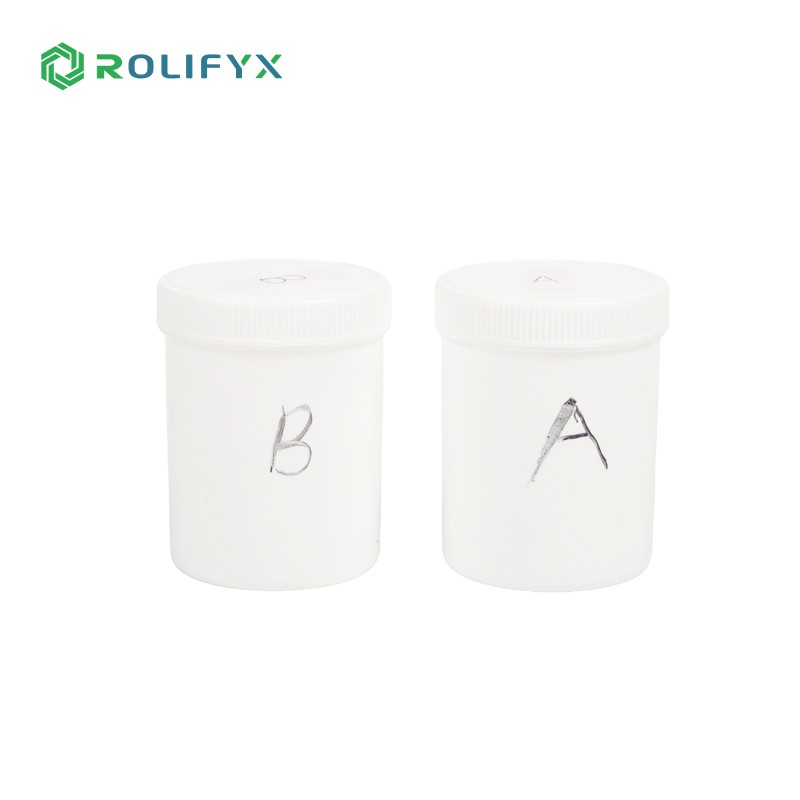
What is Thermally Conductive Gap Filler?
Thermally conductive gap fillers are valuable aids as electronic component heat dissipation materials because of their thermal conductivity properties. They fill spaces and replace the air from them. Air is a poor conductor of heat. Aided by their thermal conductivity properties, gap fillers are scientifically engineered to increase overall heat transfer inside a device or system. They keep components cooler and within allowable thermal ranges.
Why Choose Us?
Professional Technology
Rolifyx is a high-tech enterprise specializing in the research, development, production, sales, service, and operation of organic silicon polymer materials. We continuously provide customers with organic silicon materials using innovative technologies and high-quality products.
Environmentally Friendly Materials
Rolifyx's organic silicon material products are known for our innovation and environmentally friendly nature. As advocates for environmental responsibility, we prioritize the use of eco-friendly components in our manufacturing processes, ensuring that our products not only meet but exceed industry regulations.
OEM & ODM Available
We also offer tailor-made solutions based on customer requirements to better modify liquid silicone gel and provide the best possible solutions to meet customer needs.
Wide Range of Applications
Our organic silicon materials are used in various industries such as automotive new energy enclosures, battery packs, battery cells, high-speed rail, aviation, medical equipment, electronics, toys, furniture, waterproof power modules, LED lighting, electronic appliances, construction, and others.
Related Product

Thermally Conductive Gap Filler
1. Two-Component Formulation
2. Enhanced Thermal Conductivity
3. Comprehensive Thermal Management
4. Quick Curing Time
5. Adaptable to Varying Gaps
6. Versatile Application
7. Customizable Properties
8. Consistent Mixing Ratio

Silicone Encapsulation Electronics
1.High and Low Temperature Resistance
2.Excellent Electrical Insulation
3.UV Resistance
4.Excellent Light Transmittance
5.Environmental Stress Resistance
6.Fast Curing
7.Outstanding Adhesion
8.Repair without leaving traces

Silicone Potting Compound For Electronics
1. Two-component Formulation
2. Exceptional Sealing Properties
3. Superior Thermal Conductivity
4. Flexible and Durable
5. Electrical Insulation
6. Optimal Flow Properties
7. Accelerated Curing
8. Customizable Formulation

1. Excellent Environmental Protection
2. Flexible and Durable
3. Optimal Adhesion
4. Wide Temperature Range
5. Efficient Curing Process
6. Versatile Application
7. Enhanced Electrical Insulation
8. Chemical Resistance

Silicone For LED Encapsulation
1. High Temperature Resistance
2. Outstanding Light Transmittance
3. Good Adhesion
4. UV Resistance
5. Chemical Stability
6. Possessing a certain degree of flexibility
7. Exhibiting good electrical insulation performance
8. Rapid Curing

Potting And Encapsulating Silicone
1. Two-Component Formulation
2. Versatile Potting Material
3. Flexibility and Durability
4. Excellent Flow Properties
5. Moisture and Chemical Resistance
6. Temperature Stability
7. Easy Mixing and Application
8. Reliable Environmental Protection
Benefits of Thermally Conductive Gap Filler
· Versatility for Different Manufacturing Processes
Manufacturers often face the initial decision between gap filler pads or 2-part dispensable thermal gap fillers, each with unique attributes catering to different production needs. Two-component systems, requiring a mix before application, offer a tailored approach to thermal conductivity and cure time, allowing for a custom fit to specific operational demands. Gap filler pads reduce initial setup costs and are ready to use within any manufacturing process.
In short, thermally conductive gap filler materials can be suited to the specific goals of manufacturers.
· Low Outgas Options
In applications where purity is non-negotiable, such as with sensitive electronics and aerospace applications, low outgas thermal gap fillers are critical. These specialized materials are engineered to minimize the release of volatile organic compounds (VOCs) during use, which could otherwise compromise component reliability or contaminate sensitive environments. This is particularly vital in vacuum or aerospace applications where outgassing can lead to system failures.
· Curing Options
The curing process solidifies the gap filler's position and properties, and having options to cure at room temperature or with added heat broadens the application spectrum. Room temperature curing is ideal for scenarios where additional heat may damage sensitive components or is simply not feasible.
Ultimately, dispensable gap filler materials can increase production efficiency and reduce cost because they can be selectively applied at thin bond lines and to areas where heat transfer is required.
· Electrical Insulation
One standout feature of thermal gap fillers is their electrical insulating properties. This characteristic is vital in preventing electrical shorts between closely packed components, which is increasingly important as electronic devices become more compact and dense. By maintaining component integrity, thermal gap fillers ensure devices operate safely and effectively over their intended lifespan.
· Protection Benefits
Beyond thermal management, gap fillers serve as a protective layer that absorbs shock and dampens vibration, which can be detrimental to the delicate internal components of electronic devices. By providing a buffer, thermal gap filler pads minimize stress and pressure on components.
2-part dispensables can coat components decreasing thermal resistance and safeguarding against the wear and tear of regular use, rigors of transportation, and even sudden shocks to the device.
How Do Thermally Conductive Gap Fillers Work?
Gap fillers work by filling in air gaps with a thermally conductive material, preventing the air from acting as an insulator around heat-generating components. The gaps filled by these materials can range from microscopic (as small as 0.001" or 0.25mm) to as large as 0.400" or 10mm and greater.
Gap filler materials can be either selectively placed or used to cover multiple heat sources within a single application, and they can be used at varying heights to displace air and provide effective cooling. They are designed to enhance thermal performance and fit seamlessly into high-volume manufacturing operations.
Silicone Reinforcements For Thermally Conductive Gap Fillers
A thermally conductive gap filler is an essential component in many electronic devices. It's a type of filler pad that can fill the space between two components, allowing them to maintain optimal heat transfer and prevent overheating or other damage. Fortunately, silicone reinforcements are now available for these thermal gap pads, providing greater protection and durability.
Silicone reinforcements help increase the conductivity of the thermal gap pad by providing extra insulation and preventing electrical leakage during operation. These reinforced pads also reduce stress on the surface area, ensuring a long product life cycle with fewer repairs needed over time. Their flexibility makes installing them much easier than traditional materials like copper or aluminum.
When choosing the right material for your application needs, you have plenty of options thanks to advances in conductive silicone technology. From ultra-thin sheets designed specifically for high-temperature applications to thicker styles perfect for low-profile designs – finding one that balances form and function has never been easier! With so many choices, you'll be sure to find something just suitable for your device's needs.
Is Higher Thermal Conductivity Better for Thermally Conductive Gap Fillers?
Thermal interfaces should have the smallest Effective Resistance possible. The lower the Effective Resistance, the better the heat transfer across the interface.
The thinner the bond line thickness (BLT), the better the heat transfer.
To improve thermal performance, the thermal interface materials should have high thermal conductivity.
To fill gaps, materials should have the highest compressive modulus possible. Softer materials will deform to fill irregularities, improving heat transfer. In contrast, more durable materials may be more appropriate for use between two flat, smooth surfaces, since higher clamping pressure can be applied without excessive deformation.
The clamping pressure should be as high as possible, depending on the type of thermal interface material used. Heat transfer is enhanced by forcing the Thermal interface material into surface gaps or irregularities under higher pressure.

Thermal conductivity refers to a material's intrinsic ability to transfer or conduct heat. The thermal conductivity of a material has many implications. It is fundamental in the design, engineering, and application of materials in environments where heat transfer is a critical factor, such as:
· Energy Efficiency and Thermal Management
· Material Selection and Application
· Safety and Protection
· Industrial Processes
· Innovation in Materials Science
· Building and Construction
Applications of Thermally Conductive Gap Filler
Thermally conductive gap filler is useful in many areas, from building to fixing cars. It's great for keeping water out. Now, let's look at how it works and where it's used.
Construction
This foam seals gaps and cracks in building work, keeping water away. It can also be used around windows, doors, and pipes. It also helps keep buildings warm or cool by stopping air from escaping.
Automotive
This foam also benefits cars. It insulates the interior, making it quieter, and seals gaps in doors, keeping the car dry inside and helping it last longer.
DIY Projects
DIY fans like it for fixing walls or adding insulation. It's great for keeping your home dry and comfy. You can also use it for art projects because it hardens into the shape you want.
How Long Does It Take for Thermally Conductive Gap Filler to Harden?
Thermally conductive gap filler, sealant and gap filler is an extremely versatile product - perfect for virtually any sealing, bonding and filling applications on virtually any surface. Initial skin overtime is approx 45 minutes in 23 degree tempratures.
The cure rate of thermally conductive gap filler is approximately 3 - 4mm in 24hrs.
In most common applications full cure should be within 48 hours.
Is Thermally Conductive Gap Filler Conductive?
The materials provide excellent thermal and mechanical performance, while inducing virtually zero stress on components during assembly. Because they are liquid mediums, thermal gap filler materials can conform to highly intricate topographies and multi-level surfaces, delivering better wet-out for optimized thermal resistance that is generally lower than more solid pad-based mediums. Application volume and pattern is completely adaptable.
Thermally conductive gap fillers are supplied as a two-component, room or elevated temperature curing systems, resulting in a soft, thermally conductive, form-in-place elastomer ideal for coupling heat producing devices with an adjacent metal case or heat sink. Thermally conductive liquid gap fillers are primarily for applications where stronger structural bonds are not required. If structural bonding is needed, henkel thermal adhesives area an ideal solution.
Can Thermally Conductive Gap Filler Be Used As Insulation?
Yes, thermally conductive gap filler can be used as insulation. Expanding foam can be defined as a two-component mixture composed of two materials that react when mixed. This causes the foam to expand and harden, providing an insulating material.
Thermally conductive gap filler insulation can be applied to any surface that needs to be reinforced to prevent draughts and enhance structural integrity. Expanding foam became a valuable form of insulation due to its thermal properties and resistance to heat flow, otherwise known as R-value. The higher the R-value, the more effective the insulation.
Our Factory
Rolifyx, established in 2019, is a high-tech enterprise specializing in the research, development, production, sales, and services of organic silicone polymer materials. We particularly excel in innovative technologies related to organic liquid silicone foam rolls, sheets, foamed silicone strips, foamed silicone rings, thermal conductivity, potting, sealing, room temperature vulcanization rubber, as well as research and production techniques.
