

Shockproof silicone foam helps make electronics and precision instruments safer. Many devices can get damaged by shock and vibration. These problems cause about 20% of electronic product failures. Engineers use shockproof silicone foam to absorb shocks. It helps protect products and keeps important parts safe from stress. This material also protects devices from things in the environment. It helps devices work better and last longer.
Protective Effects
Shock Absorption and Vibration Control
Shockproof silicone foam helps protect electronics from getting hurt. Its special structure acts like a cushion for fragile parts. It takes in energy when something hits the device. If a device drops or gets bumped, the foam squishes and spreads out the force. This stops cracks and loose parts from happening.
Tests in labs show that shockproof silicone foam lowers vibration in electronics. The foam's closed cells soak up and spread out impact energy. In ball drop tests, the foam took in energy from a steel ball. The ball did not bounce as high, which means the foam is good at damping. The foam goes back to its shape after many hits, so it keeps working well. Foams with higher density protect better even when thin, so devices can stay slim and safe.
How well shockproof silicone foam works depends on its inside structure. Scientists checked how much energy different foams can take in. The table below shows how much energy several silicone foam structures absorb at different stress levels:
| Silicone Foam Structure | Mechanical Deformation Mode | SEA at 0.2 MPa (mJ/g) | SEA at 0.3 MPa (mJ/g) | SEA at 0.4 MPa (mJ/g) | Key Findings |
|---|---|---|---|---|---|
| SC (Single-level) | Axial compression of columns | 1.4 | 2.9 | 4.9 | Highest compression modulus but poor deformability, lowest energy absorption |
| FCT (Single-level) | Bending of filaments | 4.1 | 9.5 | 16.9 | Lower modulus, better deformability, moderate energy absorption |
| SC-SC (Multi-level) | Combination of axial compression and multi-level porous deformation | 29.4 | 34.5 | 39.3 | Best energy absorption, 8.2 to 21 times SC and 2.3 to 7.2 times FCT; wider stress plateau region |
| FCT-FCT (Multi-level) | Bending dominated at both levels | Lower than SC-SC but longer stress plateau with lower stress level | N/A | N/A | Moderate energy absorption, less optimal than SC-SC |
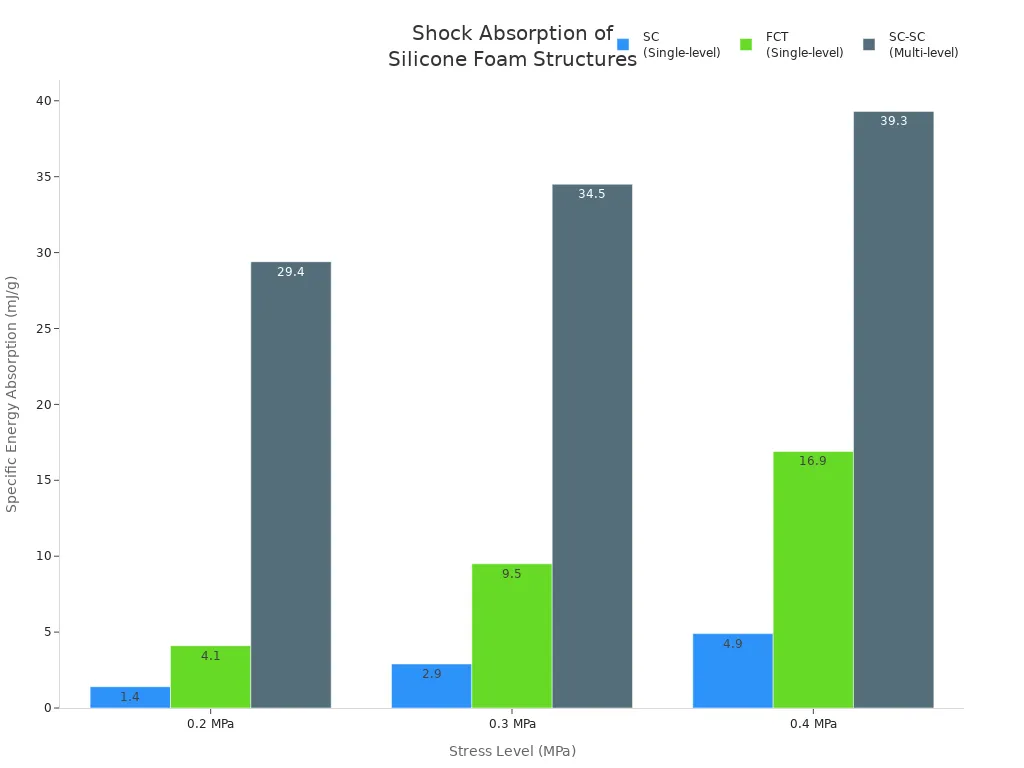
Multi-level silicone foam structures, like SC-SC, work best for shock absorption and vibration. These foams can take in much more energy than single-level ones. This makes them great for keeping electronics safe in tough places.
Devices with shockproof parts made from silicone foam break less often and stay strong over time. This material helps with both shock absorption and vibration control, which are very important for modern electronics.

Impact on Device Longevity
- Shockproof silicone foam helps electronics last longer. It cushions parts and lowers the chance of damage from drops, bumps, and movement. This protection means fewer broken pieces and devices work as they should.
- In real life, industries like aerospace and manufacturing use custom foam inserts to keep electronics safe during shipping and storage. These inserts soak up shocks, block vibrations, and keep out dust and water. Devices stored this way get less worn out, need fewer fixes, and work well for a long time.
- Taking care of the foam and storing it right also helps it last. The foam does not change shape easily, so it stays useful after lots of use. Its closed cells keep out water and dust, stopping rust and electrical problems. The foam does not carry electricity, which adds safety for electronic parts.
- Checking the foam often and taking care of it keeps it working.
- Special coatings help the foam stand up to strong chemicals and sunlight.
- Picking the right foam for each place gives the best results.
- Shockproof silicone foam meets tough flame safety rules, like UL 94 V-0. It can handle high heat and flames without burning through, even when thin. This makes devices safer, especially if there is a fire risk.
Noise and Thermal Insulation
- Thermal insulation is another big benefit of shockproof silicone foam. The foam's tiny cells trap air, which slows down heat moving through. This helps keep electronics at a steady temperature, even if the outside changes fast.
- Closed-cell silicone foam is good at stopping heat. It has a thermal conductivity of about 0.09 W/m-K, so heat moves slowly. Open-cell foam insulates even better, but closed-cell foam keeps out water and lasts longer. The foam can handle heat up to 200°C (392°F) and short bursts up to 250°C (482°F). This makes it good for electronics in hot or cold places.
- Thermal insulation also protects devices from quick temperature changes. The foam does not stretch or shrink much, so it keeps its shape and blocks dust and water. This helps electronics and precision instruments work better and last longer.
- Shockproof silicone foam also makes devices quieter. It takes in sound waves and stops vibrations, so devices do not make as much noise. This is important in places where noise can cause problems or bother people.
- The foam's solid skin and water-repelling nature make it great for sealing out moisture and dust.
- It stands up to chemicals, sunlight, and extreme temperatures, so it keeps protecting devices.
- Both soft and firm foam types can fill spaces, spread out weight, and protect from impacts.
- Shockproof silicone foam gives cushioning, thermal insulation, and impact protection all in one. This makes it a top choice for keeping electronics and precision instruments safe in many industries.
References:
Scientific studies on silicone foam energy absorption and mechanical properties.
Laboratory tests on vibration reduction and foam durability.
Industry standards for flame retardancy (UL 94 V-0).
Real-world applications in aerospace, manufacturing, and electronics protection.
Data on thermal conductivity and environmental resistance of silicone foam.
Applications
Electronic Device Casings
Shockproof silicone foam is important for keeping electronic devices safe. Many handheld gadgets and built-in systems use this foam in their cases. It helps stop damage from drops and bumps. The foam takes in shocks and cuts down on vibration. This keeps delicate parts safe inside. Protecting electronic components is needed for both home and work products.
The table below lists some product series that use silicone foam in their cases. These cases are found in many fields, like IoT, industrial control, and built-in systems.
| Product Series | Description | Typical Device Types / Applications |
|---|---|---|
| LCS series | Handheld plastic cases with silicone covers | Handheld electronics needing shockproof protection |
| LCT series | Handheld cases with shockproof silicone covers | Handheld electronics needing enhanced shock resistance |
| PFG series | Shockproof plastic enclosures | Handheld and embedded devices needing shockproof casing |
| TW / TWN series | Multipurpose plastic enclosures | IoT network devices, sensor enclosures, embedded PC cases |
| WH series | IP67 handheld enclosures | Rugged handheld devices needing waterproof and shockproof protection |
| AWP series | IP68 aluminum enclosures with silicone protectors | Embedded systems and industrial devices needing waterproof and shockproof casing |
These cases help devices last in tough places. They protect electronic parts by blocking dust, water, and hard hits. Many engineers pick silicone foam for shockproof jobs. It helps devices work longer and saves money on repairs.
Tip: Devices with silicone foam cases often last longer and break less, even in rough places.
Precision Instrument Sealing
Precision instruments often work where there is water, dust, or big temperature changes. Silicone foam seals keep these tools safe from harm. The foam stays bendy and sticks well, even after lots of use or sun and heat.
Main benefits of silicone foam sealing in precision tools are:
- Waterproof and does not rust, so it works in sensitive places.
- Stays flexible and sticks well, even with heat and sunlight.
- Stops mold and mildew, which keeps things clean and strong.
- Safe to use on soft materials like metals and glass, which helps protect electronic parts.
- Keeps its shape and does not relax much, so gaskets last longer.
- Seals well against tiny dust, rain, and fire.
- Cuts down on shocks and vibration, which protects delicate electronics.
- Works in hot or cold and stands up to chemicals, sunlight, and ozone.
- Precision tools used outside or in factories need these seals to work right. The foam can handle tough spots, so it is a top pick for protecting electronic parts and stopping vibration.
Custom Inserts and Gaskets
Custom inserts and gaskets made from shockproof silicone foam give special protection for electronics and precision tools. Designers use silicone because it bends, lasts long, and takes in shocks well. The foam stands up to heat and water, so it is great for cases and delicate gear.
Custom foam inserts are shaped to fit each device. This makes sure they fit tight and take in shocks well. Ways like injection molding and vacuum forming help make strong, tough insides. These inserts keep breakable things safe when moving or being used.
Silicone foam comes in soft to hard types. Soft foams squish more and give good padding, which is best for stopping vibration and shocks. Harder foams are stronger and do not tear easily, so they work for heavy jobs. Some special foams also block heat, sunlight, and fire.
Custom silicone foam gaskets also keep out dust, water, and other dangers. They work in hot or cold and do not get hurt by sunlight or ozone, so they are good for outside use. Compared to regular inserts and gaskets, silicone foam ones last longer and keep their shape, so you do not have to replace them as much.
Note: Custom silicone foam parts may cost more at first, but they work better and last longer than regular ones.
Material Comparison
Shockproof Silicone Foam vs. Alternatives
Non-conductive silicone foam is a top shock-absorbing material for electronics and precision instruments. Engineers often look at it next to polyurethane foam. The table below shows how they are different:
| Property | Silicone Foam | Polyurethane Foam |
|---|---|---|
| Loss factor (tanδ) | 0.05 to 0.2 | 0.1 to 0.3 |
| Resilience modulus | 30 to 50% | 25 to 60% |
Non-conductive silicone foam has open cells. This makes it soft and easy to squish. Devices get better padding and shock protection. The foam bounces back fast after being hit. Air moves through the foam, so it helps with both padding and keeping things cool. Polyurethane foam has closed or partly closed cells. It is stronger and gives some shock protection. It works well in places where strength is important.
Non-conductive silicone foam stays strong and keeps its shape under pressure. It does not squish or change shape as much as PE or EVA foams. Sorbothane is another material that stops shaking and vibration well. But non-conductive silicone foam is best for high heat and long use. It protects delicate electronics when they are made and moved. It helps devices work well for a long time.
Non-conductive silicone foam gives devices a soft and safe shield from shocks and shaking. Its special structure makes it great for electronics that need both safety and bending.
Performance in Harsh Environments
Non-conductive silicone foam works well in very hot or cold places. It can handle heat up to 250°C and does not lose its shape. Some types can even take heat up to 315°C. The foam stays bendy in cold down to -40°C. It does not get hurt by ozone, sunlight, or radiation. This makes it good for outdoor and factory use.
Non-conductive silicone foam does not soak up water. Its water-repelling nature keeps electronics safe in wet places. The foam also stands up to chemicals, oils, and acids. This makes it a smart pick for boats, cars, and factories. The closed cells keep out dust, germs, and mold.
Non-conductive silicone foam keeps working even after lots of use. It does not break or change shape in tough spots. Devices with this foam stay safe from shocks, heat, and rust.
Non-conductive silicone foam blocks water and dust.
It stands up to chemicals and bad weather.
The foam works in both hot and cold places.
Non-conductive silicone foam helps electronics last longer, even in the hardest places.
References:
Studies comparing shock protection and strength of silicone and polyurethane foams.
Research on how non-conductive silicone foam lasts and handles heat in factories.
Data on how silicone foam panels block water, chemicals, and weather.
Lab tests on foam in wet and harsh places.
Practical Considerations
Compatibility and Integration
Engineers need to think about a few things when using shockproof silicone foam in electronics. The foam has to stick well to many surfaces. If the surface is dirty, the foam might not stick right. Cleaning the surface helps the foam stick better. Sometimes, special treatments like plasma or corona are used to help. If you press the foam too much, it can move out of place. This makes it not protect or seal as well.
- Dirty surfaces or not enough treatment can cause sticking problems.
- Pressing too hard can make the foam lose its shape or move.
- The foam should match the device's chemicals so it does not get damaged.
- Choosing the right foam hardness and glue helps it work with different electronics.
- Good installation means cleaning and making the surface rougher for better sticking.
- The foam needs to handle stress and temperature changes to keep working.
- Manufacturers use Liquid Silicone Rubber (LSR) and liquid injection molding to make foam parts that fit devices well. These foam parts often have sticky backs or are shaped for easy use. The foam can stick to rough or changing surfaces. It is flexible and can be pressed to fit tightly. This helps seal out dust and lower vibration. Double-sided tape helps the foam stay in place, even when the device gets hot or cold. The foam keeps its shape and protects the device during temperature changes.

Environmental and Safety Factors
Shockproof silicone foam must follow strict safety and environmental rules. Many foams have certifications to show they are safe and good for the environment. These certifications mean the foam does not have harmful chemicals and can be used in many places.
| Certification Type | Certification Name(s) |
|---|---|
| Environmental Compliance | RoHS, REACH |
| Environmental Management System | ISO14001 |
| Hazardous Substance Management | IECQ QC080000 |
| Flame Retardant (non-environmental) | UL94-V0, HBF HF-1 |
The foam can handle heat, cold, and chemicals. It keeps working when the temperature changes a lot. This is important for electronics that get hot or cold while working. The foam also blocks water and dust, so devices are safer in tough places. Its thermal stability helps protect sensitive parts from getting too hot or too cold. The foam does not burn easily, so it helps keep electronics safe from fire.
Tip: Always look for certifications before picking shockproof silicone foam for electronics. Certified foam gives better safety and thermal protection.
Shockproof silicone foam helps keep electronics safe from shocks. It also protects precision instruments from vibration and heat. Studies say silicone foam can save about 33% in costs. Devices stay safe and last longer with this foam. The foam is strong and does not let water in. It uses green chemistry with natural fillers. Engineers pick silicone foam for better safety. They also choose it to save money and make devices last longer.
Tip: Always look for certified silicone foam that works well and is good for the environment.
References available if you ask.
FAQ
What makes shockproof silicone foam a good choice for electronics?
Shockproof silicone foam soaks up shocks and stops vibration. Many engineers use it in packaging solutions for electronics. The foam keeps devices safe if they fall or get hit. It also blocks dust and water from getting inside. This material helps devices last longer in many packaging solutions.
How does silicone foam improve packaging solutions for precision instruments?
Silicone foam wraps tightly around delicate parts. It cushions instruments and stops them from moving. Many industries use it in packaging solutions to guard against shocks and temperature changes. The foam also keeps out moisture and dust. This helps precision instruments keep working well.
Can packaging solutions with silicone foam handle extreme temperatures?
Yes. Packaging solutions with silicone foam can take heat up to 250°C and cold down to -40°C. The foam does not lose its shape or strength. Many tests show these packaging solutions protect electronics and instruments in tough places.
Why do engineers prefer silicone foam in packaging solutions over other materials?
Engineers pick silicone foam for packaging solutions because it stands up to chemicals, water, and sunlight. The foam stays bendy and strong. It does not break down fast. Many tests show packaging solutions with silicone foam last longer than those with other materials.
Are packaging solutions with silicone foam safe for the environment?
Many packaging solutions with silicone foam meet safety and environmental rules. The foam does not have harmful chemicals. It passes tests for RoHS and REACH. These packaging solutions help protect both devices and the environment.
Note: Always check for certifications when picking packaging solutions.
References available upon request.
Choose collaboration with us for liquid silicone rubber excellence. Our unwavering commitment to quality, innovation, and personalized service sets us apart. Elevate your products with precision and reliability. Partner with us, where quality meets commitment.Click here to contact us now!