

Flame-retardant silicone foam has proven essential in advancing fire safety for railway transportation. Over the past decade, railway operators have seen a dramatic rise in the adoption of silicone foam due to stricter fire safety requirements and updated fire regulations. The implementation of new standards, such as EN 45545-2 and ASTM D1056-20, has driven railway industries to enhance safety protocols and meet rigorous fire requirements. Railway safety now depends on materials that deliver consistent fire resistance, low smoke, and minimal toxicity. Railway transportation systems must achieve compliance with evolving safety requirements and ensure all silicone foam components meet fire and safety standards. The growing focus on fire safety, combined with the increasing complexity of railway transportation, has made flame-retardant silicone foam a cornerstone for reliable fire protection in modern railway systems.
Key Takeaways
Flame-retardant silicone foam offers excellent fire resistance, low smoke, and minimal toxicity, making it ideal for railway safety.
This foam meets strict fire safety standards like EN 45545-2 HL3 and UL 94 V-0, ensuring reliable protection for passengers and infrastructure.
Its closed-cell structure blocks fire and smoke spread while maintaining durability under extreme temperatures and mechanical stress.
Common uses include sealing systems, battery protection, and electronic device encapsulation, all requiring long-term fire safety and durability.
Innovations like self-healing and nanocomposite technologies improve foam performance and help meet future, stricter fire safety regulations.
Fire Safety in Rail Transportation
Unique Risks and Regulatory Demands
Railway transportation faces unique fire safety challenges. Operators must address the difficulty of evacuating large numbers of passengers, especially during peak hours. Underground railway systems often have long evacuation routes, which increases risk during fire emergencies. The size and location of a fire can critically influence the magnitude of risk. Common hazards in railway environments include high temperatures, toxic gases such as carbon monoxide, and smoke that reduces visibility. Exits may become bottlenecks, slowing evacuation and increasing danger.
Railway vehicles must meet strict fire safety requirements. Materials undergo flammability, smoke density, and flame spread testing. Certification by recognized laboratories ensures compliance with fire safety standards. Operators focus on reducing heat release, smoke, and toxic emissions from all components. These requirements support rail industry safety compliance and protect passengers and staff.
International regulatory demands vary across regions. Europe prioritizes structural fire safety through dual-bore tunnels, motivated by past disasters like the Mont Blanc and Channel Tunnel fires. Japan often uses single-bore tunnels, which are less costly but riskier in fire scenarios. Japan compensates with strong operational safety measures and regulatory oversight, resulting in fewer railway fatalities. North America faces challenges in regulatory enforcement and safety planning, making alignment with global standards essential for improving fire safety performance.
Importance of Material Innovation
Material innovation drives advancements in railway fire safety. Flame Retardant Silicone Foam has emerged as a key solution for meeting fire safety requirements in modern transportation systems. Recent developments include integrated fire protection systems, such as those from Diehl Aviation, which combine early smoke detection, intelligent control units, and advanced fire suppression modules. These systems use aerosol generators and low-pressure water mist to contain fires quickly and gently, enhancing safety in both passenger and technical areas.
Researchers have developed flame-retardant silicone foam with halogen-free fillers, offering improved fire safety performance compared to traditional polyurethane foam. This material maintains mechanical integrity and ride comfort, making it suitable for railway seating and interior components. Ongoing studies aim to optimize foam structure and filler content for better durability and efficiency under real-world transportation conditions.
Railway operators rely on innovative materials to meet evolving fire safety requirements and standards. Flame Retardant Silicone Foam supports fire safety analysis and fire safety assessment, ensuring reliable protection for passengers and infrastructure.
Flame-retardant Silicone Foam Properties
Fire Resistance and Thermal Stability
Flame-retardant silicone foam delivers outstanding fire safety performance in rail systems. Engineers select flame retardant silicone for its ability to self-extinguish flames and resist ignition under extreme conditions. The closed-cell structure of silicone foam prevents the spread of fire and blocks smoke migration. This material achieves a high thermal stability, maintaining its integrity from -73°C to 260°C. The HT-800 family of flame-retardant silicone foam products demonstrates this wide temperature range, making them suitable for both cold and hot environments.
|
Property |
Description |
|---|---|
|
Product |
R10400M Flame Retardant Silicone Sponge Rubber |
|
Temperature Range |
-73 to 260°C (100 to 500°F) |
|
Flame Rating |
UL 94V-0 |
|
Mechanical Properties |
Similar to standard silicone sponge rubber |
|
Applications |
Enclosure gaskets, military, electronics |
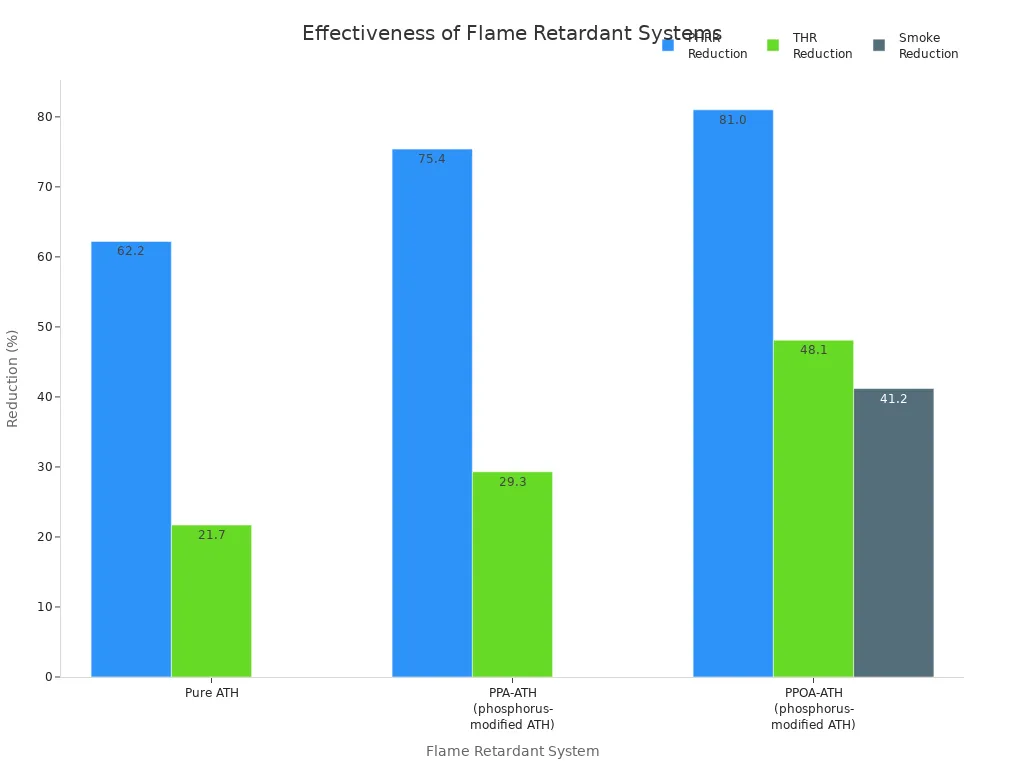
Flame retardant silicone foam uses advanced flame-retardant resins and additives to enhance flame retardancy. Aluminum hydroxide (ATH) is a common inorganic flame retardant. When combined with phosphorus-based systems, such as PPOA-ATH, the material achieves superior flame retardant performance. These systems reduce peak heat release rate (PHRR) and total heat release (THR), which are critical metrics in fire safety performance.
|
Flame Retardant System |
Peak Heat Release Rate (PHRR) Reduction |
Total Heat Release (THR) Reduction |
Smoke Production Reduction |
Key Mechanism |
|---|---|---|---|---|
|
Pure ATH |
62.2% reduction |
21.7% reduction |
Moderate smoke suppression |
Heat absorption and dilution |
|
PPA-ATH |
75.4% reduction |
29.3% reduction |
Less effective smoke suppression |
Char formation |
|
PPOA-ATH |
81.0% reduction |
48.1% reduction |
41.2% reduction |
Radical quenching |
Flame-retardant silicone foam meets strict standards, including EN 45545-2 HL3, UL 94 V-0, and ASTM D1056-20. These certifications require rigorous testing for oxygen index (OI), flame spread, and heat release. The material must achieve an OI of at least 32%, a smoke density below 150, and a toxicity index below 0.75. These properties ensure that flame retardant silicone foam provides reliable fire protection in rail applications.
Smoke and Toxicity Control
Flame-retardant silicone foam excels in controlling smoke and toxic emissions during fire events. The closed-cell ratio, often above 90%, limits smoke permeability and reduces the risk of toxic gas exposure. Flame retardant silicone resins and fillers, such as ATH and phosphorus-based compounds, suppress smoke production and minimize the release of harmful gases.
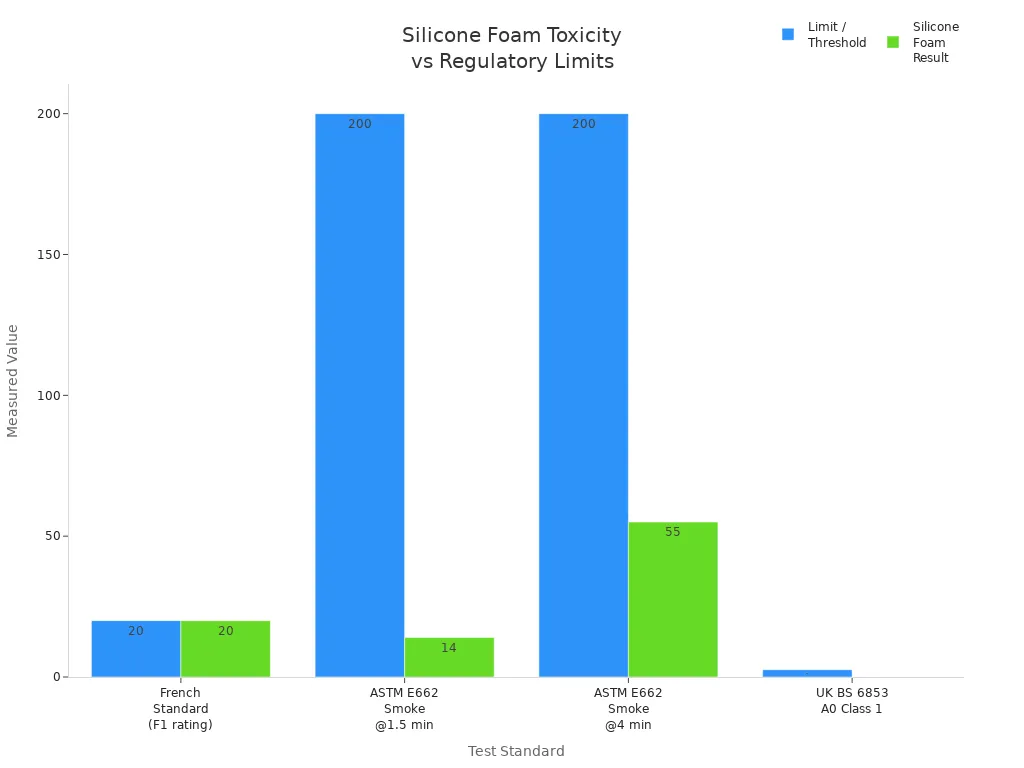
Recent studies show that silicone foam materials consistently outperform other flame-retardant resins in toxicity and smoke density tests.for example, achieves results well below regulatory limits across multiple standards.
|
Standard / Test |
Limit / Threshold |
Rogers Bisco Silicone Foam Result |
|---|---|---|
|
French Standard (F1 rating) |
Is = 20 cd (toxicity index) |
Is = 20 cd |
|
ASTM E662 Smoke Density @ 1.5 min |
200 |
14 |
|
ASTM E662 Smoke Density @ 4 min |
200 |
55 |
|
UK BS 6853 A0 Class 1 |
2.6 (optical density) |
0.01 |
Researchers have enhanced flame retardancy and smoke suppression by incorporating layered double hydroxide nanosheets into silicone foam. These modifications increase the limiting oxygen index and reduce smoke release, helping flame-retardant silicone foam meet the most demanding fire safety performance requirements. The material supports compliance with EN 45545-2 HL3 and UL 94 V-0, making it a preferred choice for rail systems.
Mechanical Reliability
Mechanical reliability is essential for flame-retardant silicone foam in railway applications. The material maintains its structure under high temperatures and mechanical stress. Silicone foam resists degradation from UV, chemicals, and moisture, ensuring long-term durability. The closed-cell design prevents water absorption, which protects against swelling and breakdown over time.
|
Property |
Test Method |
Typical Value |
|---|---|---|
|
Compression Set |
ASTM D1056 Test D @ 70°C, 22 hrs |
Less than 1% |
|
Flammability |
UL 94 V-0 Listed |
Minimum thickness 1.5 mm |
|
Service Temperature |
Continuous Recommended |
-55°C to 200°C |
Flame retardant silicone foam filled with halogen-free flame-retardant resins, such as magnesium hydroxide and expandable graphite, demonstrates improved fire safety performance and maintains acceptable comfort indices. Ceramifiable flame-retardant silicone foam forms a stable ceramic residue at high temperatures, providing additional fire protection and insulation. This property supports the use of flame-retardant silicone foam in critical applications, such as battery protection and electronic device encapsulation.
Silicone foam offers superior mechanical reliability compared to other fireproofing materials. It withstands fatigue, maintains flexibility, and preserves its sealing properties over years of service. These advantages make flame-retardant silicone foam a trusted solution for rail transit systems requiring consistent fire safety performance and long-term durability.
Flame-retardant Compliance in Rail Systems
EN 45545-2 and HL3 Requirements
Railway operators must meet strict fire safety requirements to ensure passenger protection and infrastructure resilience. EN 45545-2 sets the benchmark for fire safety standards in the railway sector. This standard defines hazard levels (HL1, HL2, HL3), with HL3 representing the highest level of fire safety for critical applications such as underground trains and high-capacity vehicles. Flame-retardant silicone foam must pass rigorous testing to achieve HL3 compliance.
Key requirements for EN 45545-2 HL3 include:
Oxygen index (OI) of at least 32% to prevent sustained combustion.
Smoke density (Ds) below 150 to maintain visibility during fire events.
Toxicity index (CIT) below 0.75 to limit passenger exposure to harmful gases.
Flame spread length under 150 mm and extinguishing time within 5 seconds.
Peak heat release rate (PHRR) not exceeding 60 kW/m² and total heat release (THR) below 150 MJ/m².
Flame-retardant silicone foam products, such as lightweight noise insulation foams, meet EN 45545-2 R10 HL3 fire protection requirements. These materials also comply with industrial fire protection standards like UL 94 V-0 and HF-1. Medium-density silicone sponge and 40-60° Shore silicone have received approvals for HL3 in R22, R23, and other risk classes. Products like Sabatack® 755 HL3 demonstrate compliance with stringent requirements for oxygen index, smoke density, and toxic substance release, making them suitable for sealing and insulation in public transport.
EN 45545-2 HL3 compliance ensures that flame-retardant silicone foam delivers reliable fire protection, low smoke emission, and minimal toxicity, supporting rail industry safety compliance and fire safety evaluation.
ASTM D1056-20 and UL 94 V-0 Standards
The railway industry relies on multiple fire safety standards to validate material performance. ASTM D1056-20 provides a comprehensive framework for classifying flexible cellular materials, including flame-retardant silicone foam. This standard outlines requirements for physical properties, durability, and environmental resistance, ensuring that materials withstand the demanding conditions of railway service.
UL 94 V-0 remains a critical benchmark for flammability testing standards. The vertical burning test evaluates how quickly a material self-extinguishes after ignition. Flame-retardant silicone foam must not drip flaming particles that ignite cotton below the sample.
|
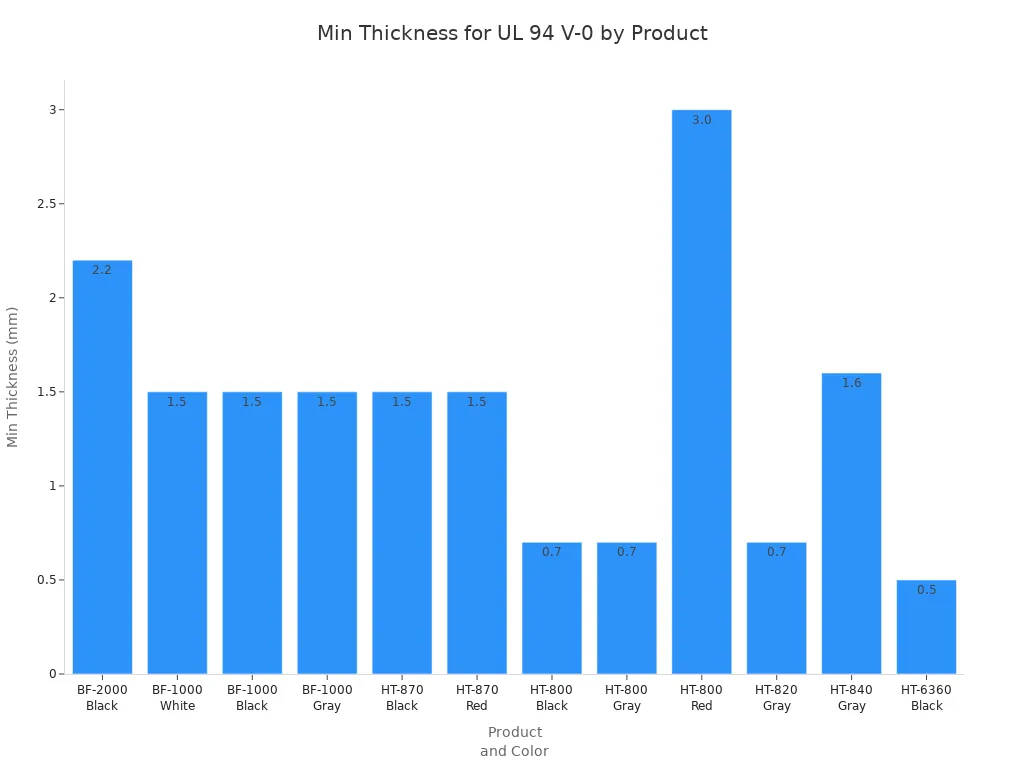
Product Code |
Colors |
Minimum Thickness |
UL 94 Rating |
|---|---|---|---|
|
BF-2000 |
Black |
2.2 mm |
V-0 |
|
BF-1000 |
White, Black, Gray |
1.5 mm |
V-0 |
|
HT-870 |
Black, Red |
1.5 mm |
V-0 |
|
HT-800 |
Black, Gray |
0.7 mm |
V-0 |
|
HT-800 |
Red |
3.0 mm |
V-0 |
|
HT-820 |
Gray |
0.7 mm |
V-0 |
|
HT-840 |
Gray |
1.6 mm |
V-0 |
|
HT-6360 |
Black |
0.5 mm |
V-0 |
Silicone foam and sponge materials do not always pass the UL 94 V-0 test without advanced flame-retardant resins. However, products like R10400 and HT-800 demonstrate that specialized chemistry and controlled manufacturing enable consistent compliance. These standards play a vital role in fire safety assessment and regulatory approval for railway applications.
Certification and Testing Procedures
Certification and testing form the backbone of fire safety evaluation in railway systems. Flame-retardant silicone foam must undergo a series of standardized tests to verify compliance with fire safety requirements and support rail industry safety compliance. The most recognized certifying body, UL (Underwriters Laboratories), oversees rigorous testing and ongoing quality control for flame-retardant materials.
Core testing procedures include:
Oxygen index testing (EN ISO 4589-2) to determine the minimum oxygen concentration needed for combustion.
Vertical burning tests (UL 94, EN 60695-11-10) to assess flame spread and self-extinguishing behavior.
Smoke density measurement (EN ISO 5659-2, ASTM E662) to evaluate visibility during fire events.
Toxicity analysis (NF X70-100, SMP 800-C) to quantify hazardous gas emissions.
Heat release testing (EN ISO 5660-1, ASTM E1354) to measure peak and total heat output.
|
Test / Standard |
Description |
NFPA 130 Requirement |
|---|---|---|
|
ASTM C1166 |
Measures flame propagation of elastomeric materials by calculating average flame spread over multiple samples. |
Average flame propagation must be less than 101.6 mm (4 in), and no specimen should be fully consumed. |
|
ASTM E162 |
Surface flammability test using radiant heat energy source to measure flame spread factor. |
Flame spread index (Is) must be ≤ 25 or ≤ 35 depending on test specifics. |
|
ASTM E662 |
Measures optical density of smoke generated by materials under flaming and non-flaming conditions over 20 minutes. |
Smoke density (Ds) at 1.5 minutes ≤ 100 and at 4.0 minutes ≤ 200. |
|
ASTM E1354 |
Measures heat and smoke release rates during combustion. |
Compliance with NFPA 130 fire performance criteria. |
|
Toxicity Analysis & Toxic Gas Generation (e.g., SMP 800-C) |
Evaluates the toxicity of gases released during combustion. |
Must meet NFPA 130 toxicity limits to ensure passenger safety. |
Third-party certification ensures that flame-retardant silicone foam meets all fire safety standards and regulatory requirements. UL certification remains the gold standard for flame-retardant resins. JBC Technologies and other industry leaders provide guidance throughout the certification process, supporting ongoing compliance and quality assurance.
The landscape of fire safety standards continues to evolve. Updates such as EN 45545-6:2025 introduce new requirements for water absorption and tighter toxicity limits. Railway operators and manufacturers must stay informed and adapt to maintain compliance and ensure the highest level of fire safety for passengers and assets.
Material Selection and Application Scenarios
Sealing Systems and Sound Insulation
Railway operators rely on flame retardant silicone foam for sealing systems and sound insulation. This material conforms to irregular surfaces, preventing water, dust, and contaminants from entering critical areas. It also provides thermal insulation and vibration damping, which improves passenger comfort and operational safety. ensuring strong fire resistance even at low thicknesses. These silicone foam solutions maintain durability across extreme temperatures and resist aging, making them ideal for long-term use in railway environments.
Battery Protection and Ceramifiable Foam
Battery modules in railway vehicles require advanced fire protection. Ceramifiable flame retardant silicone foam forms a ceramic-like barrier under high heat, blocking flame spread and preventing thermal runaway. This material emits low smoke and no toxic gases, supporting both environmental and passenger safety. ,compartment seals, and fire insulation layers. Customizable thickness and density allow adaptation to specific railway fire safety requirements. These foams help railway systems meet the highest hazard level (HL3) for risk classes R22 and R23.
Electronic Device Encapsulation
Flame retardant silicone foam enhances the safety of electronic device encapsulation in railway applications. This material provides high electrical insulation, mechanical support, and shock absorption. It maintains performance across a wide temperature range and resists UV, ozone, and moisture. Products like Wacker SILFOAM® meet UL 94 V-0 and EN 45545-2 standards, ensuring non-toxic, low-smoke operation. The foam prevents electrical short circuits and protects sensitive components from fire and environmental hazards.
Selecting the right flame retardant silicone foam depends on the specific railway application, risk class, and required hazard level. Certified materials ensure compliance and long-term safety for passengers and assets.
Innovations and Technical Trends
Self-Healing and Nanocomposite Technologies
Railway engineers continue to push the boundaries of flame retardancy through advanced material innovation. Self-healing silicone foam uses dynamic covalent bonds to repair cracks automatically, improving puncture resistance and extending service life. This technology supports long-term reliability in high-voltage cable coatings and critical sealing systems. Nanocomposite materials, especially graphene/silicone composites, have transformed fire protection in rail applications.
Graphene nanoplatelets create a dense char layer during combustion, acting as a thermal barrier and slowing pyrolysis.
The char layer formed by graphene outperforms conventional flame retardants in density and volume, providing superior protection.
Graphene's large surface area adsorbs flammable volatiles, disrupting combustion and enhancing flame retardancy.
Strong interfacial bonding and uniform dispersion of graphene in silicone improve mechanical strength and durability.
Graphene fillers form a thermally conductive network, dissipating heat and delaying ignition.
Research shows that silane grafted graphene oxide films enhance flame retardant properties by forming protective char layers and improving mechanical performance. These advances in material technology support compliance with the latest standards and rigorous testing protocols.
Evolving Smoke and Toxicity Limits
Regulatory bodies have tightened smoke and toxicity limits for flame-retardant materials in rail systems. The EN 45545-2 standards, revised in 2020, set strict requirements for smoke density and toxicity. Testing uses realistic conditions, including final product thickness and all constituent layers. The French NF X 70-100 method at 600°C evaluates smoke toxicity, with a critical threshold of 0.75 for railway applications. The ISO 5659-2 smoke chamber test, combined with EN 45545-2 Annex C, measures smoke density and toxicity at specific intervals.
|
Test Method |
Parameter |
Limit Value |
|---|---|---|
|
NF X 70-100 |
Toxicity Index |
≤ 0.75 |
|
ISO 5659-2 |
Smoke Density |
≤ 150 |
Halogen-free flame retardants, such as phosphorus and inorganic compounds, have become the preferred choice. These materials do not increase smoke toxicity or density, supporting compliance with evolving standards. Intumescent and hydroxide-based flame retardants also reduce smoke without raising toxicity. Bromine-based flame retardants are less desirable due to their impact on smoke and toxicity. The industry now prioritizes safer, halogen-free solutions that meet strict standards and pass comprehensive testing.
Future Outlook for Flame-retardant Materials
Upcoming regulatory changes, including EN 45545-6:2025, will further impact the use of flame-retardant silicone foam in rail systems. These standards will reinforce the need for materials that self-extinguish, reduce toxic smoke, and maintain mechanical integrity under fire conditions. Saint-Gobain Norseal silicone foam products already comply with the highest hazard classification HL3, offering low smoke generation and wide temperature resistance.
Scientific studies confirm that flame-retardant silicone foams maintain elasticity and performance after fire exposure, making them suitable for railway interiors and seat pads. Research continues to focus on enhancing flame retardancy through additives and coatings, aligning with evolving standards and testing requirements. The demand for high-performance flame-retardant silicone foam will increase as standards become stricter, driving further innovation in material design and fire safety.
Flame-retardant silicone foam delivers outstanding fire protection for railway systems. Operators benefit from high fire resistance, low smoke, and minimal toxicity, supporting strict safety standards and compliance. Current products like Saint-Gobain Norseal F-12 and F-20 meet the highest railway safety classifications. Future technology will introduce nano-ceramic silicone foam, which withstands extreme fire conditions and forms protective layers. Engineers face challenges balancing fire resistance, mechanical reliability, and cost. Innovations in cell structure and density will improve airtightness, insulation, and fire-blocking capabilities. Stricter standards will drive the adoption of advanced silicone foam, ensuring railway safety and fire protection for passengers and infrastructure.
Railway safety depends on continuous improvement in fire safety, standards, and material innovation. Flame-retardant silicone foam remains essential for compliance and long-term fire protection.
FAQ
What makes Flame Retardant Silicone Foam ideal for railway fire safety?
Flame Retardant Silicone Foam offers high thermal stability, low smoke emission, and minimal toxicity. These properties help railway systems meet strict standards like EN 45545-2 HL3.
How does Flame Retardant Silicone Foam control smoke and toxic gas release?
The closed-cell structure and advanced flame retardant additives limit smoke and toxic gas release during fires. This feature supports compliance with evolving regulations. For details, visit Wacker SILFOAM® fire safety products.
Which certifications should Flame Retardant Silicone Foam meet for rail applications?
Key certifications include EN 45545-2 HL3, UL 94 V-0, and ASTM D1056-20. These standards verify fire resistance, smoke density, and toxicity control. Operators should always request third-party test reports.
Where is Flame Retardant Silicone Foam commonly used in rail systems?
Engineers use Flame Retardant Silicone Foam in door seals, battery protection, and electronic device encapsulation. These applications require reliable fire protection and long-term durability.
Can Flame Retardant Silicone Foam adapt to future fire safety standards?
Manufacturers continue to innovate with self-healing and nanocomposite technologies. These advancements help Flame Retardant Silicone Foam meet future standards and stricter smoke and toxicity limits.
Tip: Always select certified Flame Retardant Silicone Foam for critical railway applications to ensure compliance and passenger safety.
Source cited:Rogers BISCO®